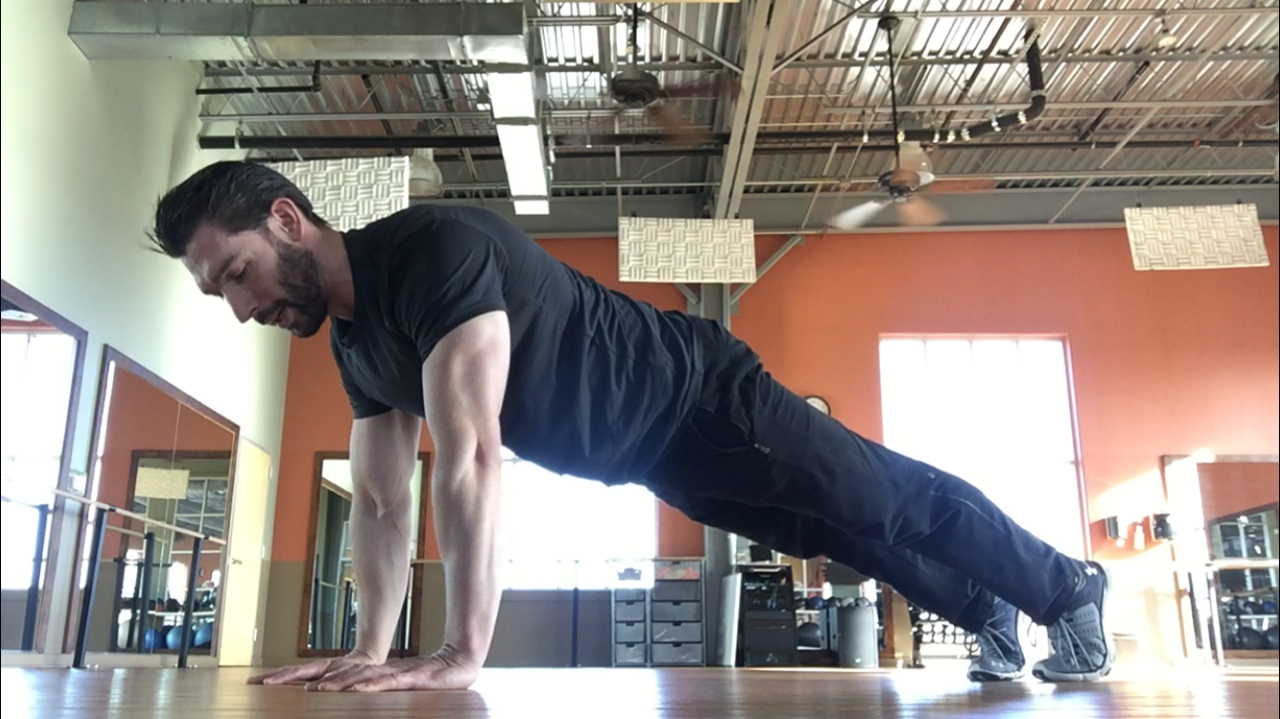
What Is Corrective Exercise?

We use the term “Corrective Exercise” pretty regularly and promote its importance and value. But like with a lot of commonly used terms this one shouldn’t become a catch-all phrase that no one really knows the meaning of. Because in fact it’s quite straightforward.

If I had to summarize corrective exercise in one sentence, I’d say it’s like doing physical therapy rehab for your whole body except you don’t need to injure yourself or have had surgery in order to start doing it.

The name can be slightly misleading since the word ‘exercise’ typically leaves the impression of doing something that’s active and requires a lot of effort and movement. While this can sometimes be the case in later stages of Corrective Exercise in order to reorient the worked on muscles to the rest of the muscular system, the usual structure of Corrective Exercise is generally slow, controlled, deliberate movements intended to affect a specific muscle or small group of muscles.

These days a lot of us have occupations that require us to sit for long periods, often in front of a computer, with our heads sticking out like a turtle toward the screen and our shoulders rounding forward and down toward the key board. Or maybe it’s the complete opposite, and you have to stand most of the day, either in front of a computer, a spreadsheet, or moving from one workstation to the next. Either way, repetitive movement can reek havoc on the body. People sitting for long periods end up with neck and shoulder pain, low back pain, and probably hip pain. People standing for long periods also end up with hip pain, and you can probably add in knee and foot pain as well. Technology may make our lives easier, but it certainly doesn’t help us maintain the physically functional levels that our bodies are intended for.

And this is where the problem can start. With the intention of staying healthy and active, we go to the gym, or take a fitness class, ride a bike or follow along to an exercise video at home. While these are great intentions, most of us are entering into these activities still carrying the effects of our job’s physical demands. Pain is not some arbitrary sensation that can be ignored because you don’t want it, or avoided if you just don’t do certain things. There is a reason why your hip, or knee, or back, or shoulder or whatever hurts. Sitting and standing for long periods affects our muscles and puts excessive demand on other muscles not meant for it. This is where Corrective Exercise becomes extremely beneficial.

If you know that sitting for long periods causes a shortening of hip flexor and hamstring muscles and deactivates your glutes, and that poor posture and weakened core muscles put strain on your lower back, then it should be logical that correcting those muscle imbalances is of paramount importance. If you don’t then your exercise routine is basically just grinding away at those same muscles that are under strain already, usually making the pain worse and eventually leading to injury. Corrective exercise uses a two part approach; the first is to understand your daily patterns to predict where you’re most likely to be tight, weakened, and under or over active, and the second is to actually observe your basic movements to confirm the predictions and figure out how limited or severe the situation may be.

From here the goal of Corrective Exercise is to help restore functional muscle movements by lengthening shortened muscles, strengthening weakened muscles, and educating on the circumstances that created this problem in order to stay healthy and prevent it from happening again. In a lot of ways it can be compared to the use of physical therapy after surgery or a serious injury. Muscles that have been injured or have ceased their intended function due to lack of use are worked on until proper strength levels are achieved and pain is eliminated and full functional movement has been restored.

Send us an email with any questions and sign up for a free consultation! Thanks for reading!

Ask A Question

Intro To Running

Going for a run is one of the most common forms of exercise.

Whether it’s for stress relief, weight loss, competition or just enjoyment, we have friends, family, and clients that run on a regular basis. So we thought we’d offer some insight on how to approach running and ways to avoid injury so you can get the most out of your run, no matter what inspires you.

One of the main things we want to impress upon you is the fact that everyone is or has the potential to be a natural born runner. But running has to be treated like any other physical activity, you have to train for it. If you’re someone who goes running periodically, meaning you take months off at a time, and in between you randomly go for an aggressive 3 mile run, then it shouldn’t surprise you when your feet and shins hurt the next day and your hips feel like they’re locked in a vice. If you hadn’t done bench press for 2 months I doubt you would go into the gym and attempt your last PR. And if you did you’d be paying for it. So running is no different. If you want to be a healthy runner you need to put in the time to practice and prepare your body for the demands you are asking of it. This includes taking time in the beginning to acclimate your body and giving it time to get strong enough to handle the 3 or 5+ mile run you might just be casually trying to do every few weeks or couple of months right now.

But regardless of whether you are a casual runner or someone who starts every day with a morning run, we want to offer some tips for keeping those joints working smoothly and those muscles operating at their optimal capacity.

If you break down the movement of running it’s pretty straightforward: it’s the constant flexion and extension of multiple joints while balancing from foot to foot. It may not feel that way when you’re moving so quickly through the motion but feet, ankles, knees, hips, and shoulders are all repeatedly flexing and extending. In order to meet the demands of this locomotion it helps to prep your body and check the mobility of each of these joints. A great way to check this is by performing a bodyweight squat. This will test your ability to comfortably flex and extend both your hips and knees, as well as test the flexion of your ankles, which is referred to as dorsiflexion.

Some questions to ask yourself.

Can you comfortably perform a proper squat? Are you able to maintain hip tension and stability through the entire range of the squat? Are you able to maintain balance and keep your whole foot on the ground with center of gravity in the front of the heel and an arch in the middle? Being able to do this will ensure that all of your energy is being spent on an effective run, and not wasted on trying to keep your balance or hold yourself up due to a lack of range of motion or hip drive.

With regard to mobility the last two things you want to consider are back tension and your ability to have proper shoulder extension. Sitting all day often leads to low and mid back tension and poor posture, which can easily affect your ability to rotate through the trunk and create core stability while running. This will most likely reveal itself with pain or stiffness in the low and mid back as you run.

While performing a dozen or so squats is a great way to warm up and check your mobility, also consider adding in a couple minutes of jump rope. This will get your feet and ankles ready for your run, warm up your balance, and give you a chance to engage your back and lats for good posture, as well as working on maintaining a neutral hip position with engaged glutes. Once you know your glutes are fired up and you have good mobility through your joints, do several short distant sprints and jogs to get everything primed and ready, and then start your run.

In no way is this a comprehensive list of all the things you should or need to be doing. It is more of a guideline as to how you should be thinking about running and how you approach getting yourself in the healthiest physical state to have successful and pain free runs. Please feel free to contact us with any questions or set up a consultation to discuss any particular obstacles or issues you might need help with. Thanks for reading!

 Ask A Question